

The long simmering question of how to reconcile Indigenous protocols and world views with Canadian law is playing out between two First Nations on Vancouver Island.
The K'ómoks Treaty, drafted between K'ómoks First Nation, the province and Canada, was tabled in the B.C. legislature Tuesday.
But Wei Wai Kum First Nation says the K'ómoks Treaty claims 80 per cent of its traditional territory, and wants the treaty paused to add more language about kinship histories and protocol before it's passed into law.
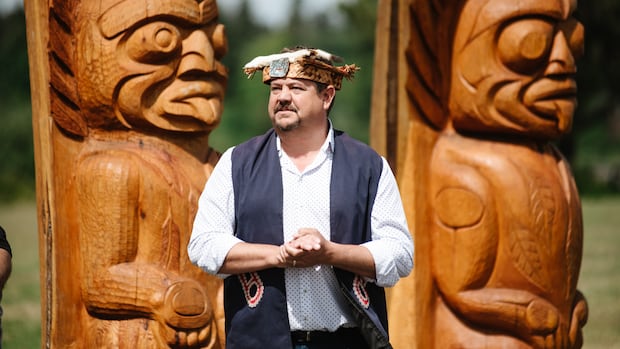
Chris Roberts, elected chief of Wei Wai Kum First Nation, said the treaty will give K'omoks First Nation "more say or preferential treatment by the Crown," and feels the treaty's language fails to accurately represent its relationship with Wei Wai Kum.
"There is a a big need, a requirement, actually, to have a protocol in place that represents and reflects our traditional governance, our historical interactions, and how relationships were managed in an area that now has a massive, overlapping claim," said Roberts.
"The fact that it's not even mentioned in their history, in their treaty document, which becomes a new sort of base line … into the future, that's a challenge."
Wei Wai Kum First Nation is a part of the Ligʷiłdaxʷ group of tribes, the southernmost group of the Kwakwaka'wakw First Nations.
According to its website, K'ómoks Nation has a complex history "rooted in deep layers of interconnections." The website says its members value their relations and kinships with the Kwakwaka'wakw, Coast Salish and Nuu-chah-nulth people and other peoples along the coast.
Roberts said Wei Wai Kum First Nation wants to see more of a "core territory recognition" in the treaty to better reflect each nation's overlapping lands.
"We're not denying that there's a shared history of places," said Roberts.
"K'ómoks is very unique in that where they draw their identity from ... and that history should be more fully reflected in who they are in their treaty."
Once provincially and federally ratified, the treaty would confirm K'omoks First Nation ownership of about 3,442 hectares of land scattered around Vancouver Island with an additional 1,592 hectares available for purchase from the province over time.
B.C. treaty rightsPeter Millerd, an Aboriginal rights and title lawyer at Mandell Pinder LLP in Vancouver, said while modern treaties implement rights of First Nations in the province, B.C. treaty rights differ from inherent Aboriginal rights and title, which are federally protected under Section 35 of the Constitution.
But treaties do typically involve transfers of Crown lands.
"As a practical matter, those lands are maybe off the table for other Indigenous groups to acquire," said Millerd.
"It would be open to another group to make a claim to Aboriginal title even to lands that have been offered or transferred under treaty."
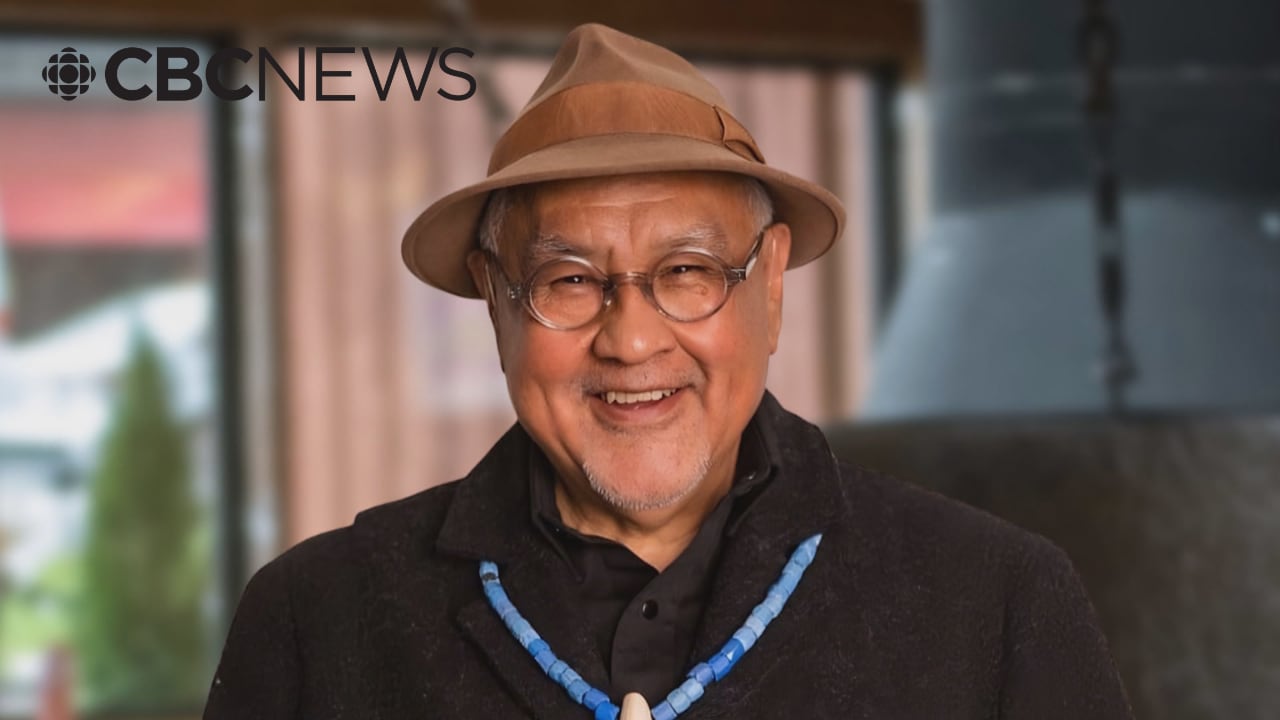
 Lawyer Peter Millerd says it can be more difficult to change a treaty after it’s been ratified as it has been given the force of law. (CBC)
Millerd said it can be more difficult to change a treaty after it's been ratified as it has been given the force of law, requires a mechanism to do so, and requires the agreement by all parties.
He said changes are usually best made during the consultation process between the government and First Nations that have overlapping claims.
"There is a duty to consult on the part of the Crown, which in this case is both British Columbia and Canada, regarding any adverse impact that a treaty may have on a neighbouring Indigenous group," said Millerd.
"And that may extend to a duty to accommodate, to provide some kind of other benefit or to take some step to to deal with the impact that the treaty is having on them."
Consultations are ongoing, says B.C.A statement by Spencer Chandra Herbert, B.C.'s minister of Indigenous Relations and Reconciliation, said the province has been in consultation since 2008 with all First Nations that have identified shared or overlapping territories with K'ómoks First Nation.
"These consultations remain ongoing, and we remain committed to this work, with some changes having already been made to the treaty to address neighbouring First Nations' concerns," said the statement.
"There are still several steps for all parties to take, including federal legislation, before the treaty ratification completes over the coming years."
In a statement, K'ómoks First Nation said it takes Wei Wai Kum's concerns seriously and is committed to continuing dialogue for productive and collaborative discussions.
"Modern treaties include ongoing mechanisms for collaboration and consultation," said the statement.
"This is not the end of discussions — it is the beginning of implementation."
WATCH | Wei Wai Kum calls for delay of treaty:A Vancouver Island First Nation is expressing concerns over a neighbouring nation's treaty. The Wei Wai Kum First Nation in Campbell River says signing the K'omoks treaty could infringe on its own rights and title. And as Rob Easton reports, they are calling for the treaty initialing ceremony to be delayed.Wei Wai Kum First Nation said in a news release it will likely seek relief through the courts if an agreement that honours history, kinship ties, and protocol cannot be reached.
But Roberts said he hopes it doesn't come to that.
"[Come] down together with open hearts and open minds to share that history and share how we're connected, and get smart people in the room that are, good with words and put it on paper," said Roberts.
"And that's going to build that true lasting reconciliation among nations and with the Crown, and which is going to benefit everyone who lives in our territories."