




Shannen HeadleyWest Midlands

 Getty Images
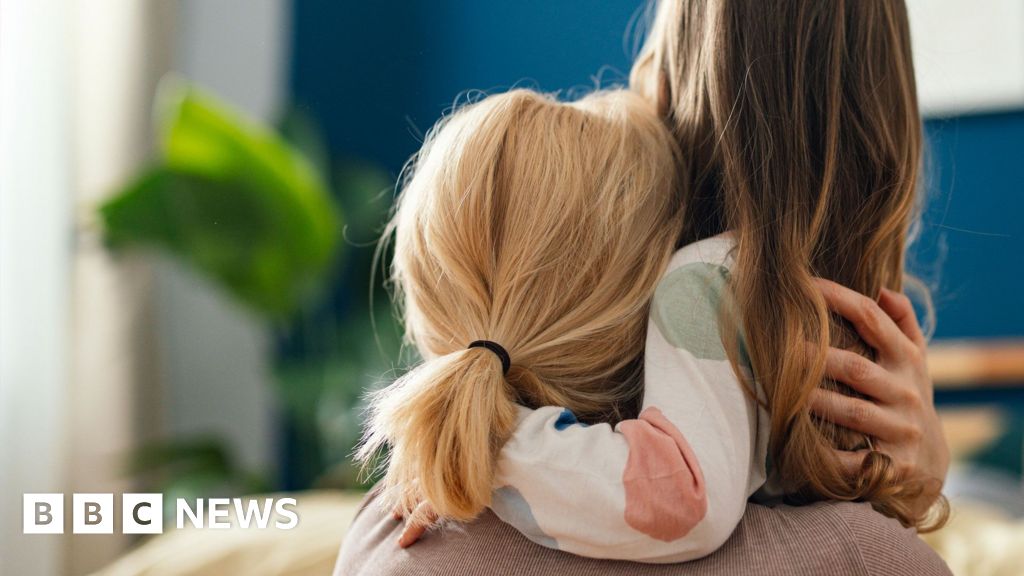
Becky said the family court system "prolonged" the abuse after her ex-husband was convicted of her rape (generic image)
After years trapped in an abusive marriage, Becky - not her real name - thought her horrific ordeal might start to be over the day she watched her ex-husband jailed for raping her twice.
But a fresh nightmare was around the corner, when, three days later, she had to face him in the family courts to try to stop him having parental access to their children.
She is one of thousands of parents who have had to fight against a violent or abusive partner's right to maintain contact.
"I shouldn't have had to co-parent with the man who raped me," she said, as she described the "horrendous" way she felt the family court system "prolonged the abuse".
A legal principle, introduced into the 1989 Children Act in 2014, means judges must assume that the involvement of both parents in child contact cases are in the child's best interest.
This Presumption of Parental Involvement applies even when a parent has been convicted of domestic abuse.
The government has addressed the issue, with the Ministry of Justice announcing plans to repeal the assumption in October.
But Becky said women whose abusive partners had been jailed should never have to face them in the family courts to begin with.
 Getty Images
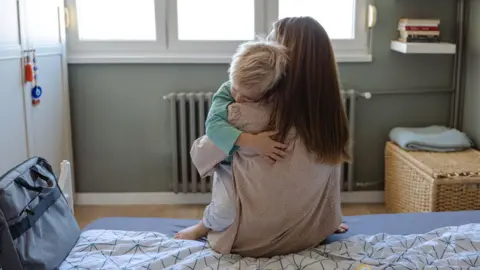
Becky said the impact of the family court proceedings was "immense" on her and her children (generic image)
She is now involved in a campaign to help get the law changed. She wants parental responsibility to be stripped from abusers automatically at conviction.
"Despite the fact he was found guilty, it took months for a judge to finally agree he shouldn't have contact with the children," said Becky.
"I don't think any victim should have to go through that. The parental responsibility should be taken away automatically."
If you are affected by any of the issues raised in this article, help and support is available via BBC Action Line.Becky found the strength to leave her marriage after eight years of abuse, in 2018.
But despite initially living with her parents, she had to return with the children to the marital home due to financial reasons.
The former couple lived separate lives and divorce proceedings were under way, she said, when twice her ex flew into a rage and raped her.
She reported the attacks when they happened, in 2019, but he was not charged until 2022 and due to nationwide delays in the UK's court system, it was another two years before he was convicted and handed a custodial sentence.
He was found guilty by a jury in 2024, but was released on bail and sentenced six weeks later. A family court judge allowed him access to their children during this time.
"When you're going through the stress and trauma of the investigation, what he did to me and the intrusiveness of a trial - to have to go through family court as well is so difficult," Becky said.
"Having to see and hear him again via video link wasn't fair for me to have to do as a victim."
 Getty Images
The Ministry of Justice announced plans to repeal the presumption of parental involvement in October
The impact of the family court proceedings on her and the children was "immense", she said.
"I carried on working and was normal as possible. But children know when something isn't right.
"They are victims as well - they were impacted by his behaviour directly and indirectly."
After his conviction, the family court judge ruled that the couple's children would be able to visit their dad in prison after he began his sentence.
But Becky took the decision to the Court of Appeal, which was upheld. She then had to return to family court to fight for his parental rights to be restricted.
The 10 months of "endless hearings" were horrific, she said.
"It ruled my life when the trial should have been the end of it - the guilty verdict should have been the end of it."
A change in the law
A government Harm Panel report, published in June 2020, found that allowing child contact in cases of domestic abuse could be "entirely inappropriate".
Five years on, the Ministry of Justice's plan to repeal the presumption means courts would make decisions based on the consideration of a child's safety and welfare - without a default assumption.
It is not yet known when the law will change.
Natalie Fleet, the Labour MP for Bolsover in Derbyshire, was recently successful in a similar campaign to amend the Victims and Courts Bill.
The new measures, currently at committee stage, would restrict convicted abusers of parental rights where a child has been born as a result of rape.
The rights would also be restricted when a parent is convicted of serious sexual offences against any child, and has been sentenced to four or more years in prison.
Another exception to the rule is Jade's Law - which was brought into place by Parliament in 2024 after two grandparents were forced to co-parent with their daughter's partner, who killed her.
Now the law states that when one parent kills the other, the court will be required to restrict their parental responsibility automatically.
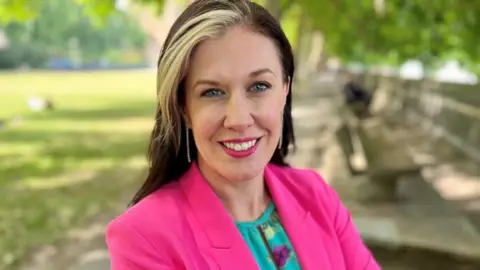
MP Natalie Fleet was successful in her campaign to restrict convicted abusers of parental responsibility for a child conceived by rape
The "pro-contact culture" within the family court system has been criticised widely by domestic abuse charities.
Research by Women's Aid in its Nineteen More child Homicides report highlights children who have been killed by abusive parents through child contact approved in family courts.
Policy manager Isabella Lowenthall-Isaacs said: "The decision to repeal the presumption is tragically overdue, but is one we very much welcome.
"The damage it's caused has been immense. There's so much further work that needs to be done to ensure convicted parents do not get automatic rights to have contact with children in family court cases."
'Don't give up'
Becky said the next step for her was to try to move on with her life and help her children recover from the pain they have endured.
"My message to other survivors of domestic abuse, who are in the position I was in, is to keep fighting and don't give up," she said.
A Ministry of Justice spokesperson said it recognised the courage it took for victims to speak out about their experiences.
They said: "We are committed to ensuring that children and survivors of domestic abuse are protected from further harm.
"Victims can already apply to court to restrict an offender's parental responsibility where they've committed an offence against someone they share children with.
"The family court will always make decisions in the best interests of the child."