


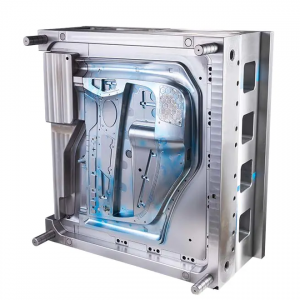







In plastic manufacturing, defects can significantly affect product usability and appearance. Many of these issues originate from the Plastic Injection Mold design or process parameters.
One of the most common defects is warpage, which occurs due to uneven cooling or internal stress distribution. Parts with inconsistent wall thickness are especially prone to deformation. Maintaining uniform thickness between 1–3 mm helps reduce this issue.
Sink marks are another frequent problem, often caused by thick sections that cool at different rates. Reducing rib thickness to about 60% of wall thickness can help prevent surface depressions.
Short shots occur when molten plastic fails to fully fill the cavity. This is often related to insufficient injection pressure or improper gate design. Typical injection pressures range from 800 to 2500 bar depending on material viscosity.
Flash defects happen when molten material leaks between mold parting lines due to excessive clamping force imbalance or worn mold surfaces.
Air traps and burn marks are caused by poor venting design. Proper vent depth is usually between 0.01–0.03 mm to allow air escape without material leakage.
A skilled Plastic Injection Mold Manufacturer uses simulation tools to predict these defects before production. Mold flow analysis helps identify flow imbalance, weld lines, and cooling variations early in the design phase.
Process parameters such as injection speed, holding pressure, and cooling time also play a critical role. Cooling typically accounts for the largest portion of cycle time, sometimes up to 70%.
By combining proper mold design and controlled process parameters, manufacturers can significantly reduce defect rates and improve consistency in mass production environments.