






Choosing between a FUSS Hair Transplant in Dubai (Follicular Unit Strip Surgery) and FUE (Follicular Unit Extraction) is the most significant decision a patient faces. While both methods result in permanent, natural hair growth, they differ fundamentally in how the hair is harvested and how the body heals afterward. In clinical settings, we observe that neither method is "better" in a vacuum; rather, one is usually better suited to a patient’s specific hair loss stage, scalp laxity, and lifestyle goals.
This guide provides a clinical comparison of the two techniques, detailing the physical sensations of each and the safety considerations that dictate which path is right for your restoration.

The Core Surgical Distinction
The primary difference lies in the donor area management. FUSS involves the removal of a single strip of tissue, while FUE involves the extraction of individual follicular units one by one.
What are the clinical pros and cons of each method?
Surgeons evaluate these key metrics to help patients choose:
-
Graft Yield and Efficiency: A FUSS Hair Transplant in Dubai typically yields a higher number of "robust" grafts in a shorter time. FUE is more time-intensive and may require multiple days for high-volume cases.
-
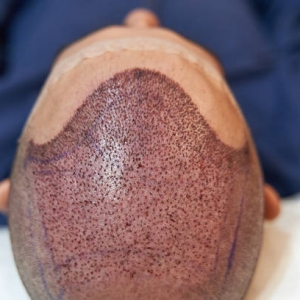
The Scarring Profile: FUSS leaves a single, fine linear scar that is easily hidden by hair. FUE leaves thousands of "micro-dots" across the donor area, which are less visible if the head is shaved very short.
-
Follicle Integrity: Because FUSS grafts are dissected under a microscope, the transection rate (accidental damage to the root) is often lower than the "blind" punch extraction used in FUE.
Comparing the Patient Experience
What are the actual sensations of FUSS vs. FUE?
While both procedures are performed under local anesthesia, the "feeling" of the recovery phase differs due to the nature of the donor wounds.
Step-by-Step Patient Sensations:
-
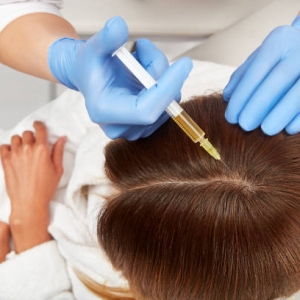
The "Numbing" Phase: Identical for both. You will feel 4 to 6 sharp pinches to desensitize the scalp.
-
The "Work" Phase: In a FUSS Hair Transplant in Dubai, you feel light "tugging" for about 30 minutes. In FUE, you feel thousands of tiny "taps" or "vibrations" over several hours.
-
The Recovery Week: FUSS patients report a sensation of "tightness" at the back of the head. FUE patients report a "stinging" or "sunburn" sensation that fades within 48 hours.
-
Sleep Comfort: FUSS patients must be more careful with neck positioning for 10 days to protect the sutures. FUE patients can typically sleep in a normal position sooner.
"I chose FUSS because I needed 3,500 grafts and didn't want to spend two days in the clinic. The 'tight' feeling was annoying for a few days, but once the stitches came out, I was fine. My friend did FUE because he likes his hair very short, and he was happy with his choice, too." — Omar
Safety Considerations: Scalp Health and Activity
Who is a better candidate for each?
Clinical safety protocols ensure that we do not perform a procedure that the patient's skin cannot handle:
-
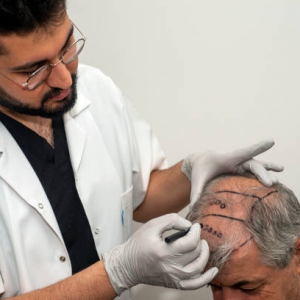
Scalp Laxity (For FUSS): If your scalp skin is very tight, a FUSS Hair Transplant in Dubai is not safe, as it could lead to a wide scar. We perform a "Laxity Test" during your consultation.
-
Donor Density (For FUE): If your donor hair is thin, FUE might make the back of your head look "moth-eaten." In these cases, FUSS is safer as it removes a strip without thinning out the surrounding hair.
-
Exercise Routine: If you are a heavy weightlifter, FUE is often safer as there is no linear incision that could stretch under the pressure of heavy straining. FUSS patients must wait 4 weeks before return to the gym.
Comparison: Technical Data Points
| Metric | FUSS Hair Transplant in Dubai | FUE (Extraction) |
| Harvest Method | Linear Strip | Individual Punch |
| Microscopic Dissection | Yes (Always) | No (Usually Manual) |
| Graft Survival Rate | 95% – 98% | 90% – 95% |
| Surgical Duration | 4 – 6 Hours | 6 – 12 Hours |
| Ideal Hair Length | Grade 3 or longer | Grade 0 to 2 |
The Result Timeline: Is One Faster?
Does hair grow faster with one method?
The biological growth timeline is identical for both procedures, as the body’s healing response to the implanted grafts is the same.
-
Weeks 1–2: Donor healing. FUE scabs heal in 5 days; FUSS sutures are removed in 10–12 days.
-
Months 1–3: Both go through the "shedding" phase.
-
Months 4–12: Both see the same gradual thickening of the hair. By the one-year mark, the density and appearance of a FUSS Hair Transplant in Dubai and FUE are indistinguishable.
"At the one-year checkup, my doctor showed me photos of a FUSS patient and an FUE patient. You literally couldn't tell which was which from the front. The results were both perfect." — Zaid
FAQ: Choosing Your Method
Can I do FUSS if I plan to shave my head?
If you want to wear your hair shorter than a "Grade 2," FUE is the better choice. FUSS is ideal for those who keep their hair at a standard length.
Is one method more expensive?
In Dubai, FUSS is often more cost-effective because the surgical time is shorter. FUE is usually priced higher due to the labor-intensive nature of individual extraction.
Can I switch from FUE to FUSS in the future?
Yes. Many patients start with FUE and later, if they need more hair, opt for a FUSS Hair Transplant in Dubai to maximize their remaining donor supply.
Does FUSS hurt more than FUE?
Pain is subjective, but neither is "painful" during the surgery. FUSS has a longer period of "discomfort" (tightness) due to the stitches, whereas FUE discomfort is shorter but "sharper" (stinging).
Why Choose Tajmeels Clinic?
At Tajmeels Clinic, we don't believe in a "one-size-fits-all" approach to hair restoration. Whether you opt for a FUSS Hair Transplant in Dubai or an FUE procedure, our clinical team focuses on the same goal: maximum graft survival and a natural, undetectable result. We provide a transparent, medical environment where we analyze your scalp elasticity, donor density, and lifestyle to recommend the technique that will give you the best possible outcome. With our expert surgeons, your path to a full head of hair is guided by data, not trends.