


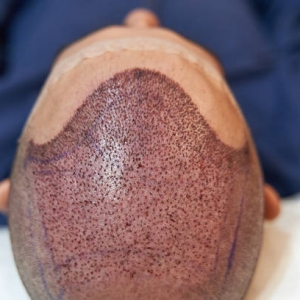
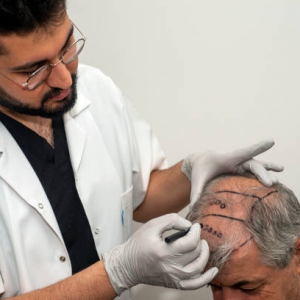
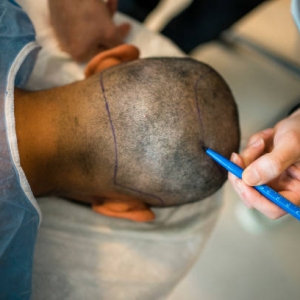
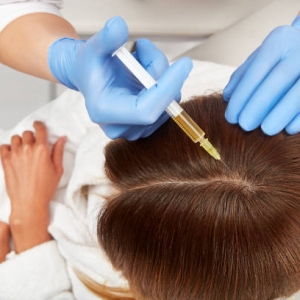




Restoring a thinning crown—often referred to as the "vertex"—presents one of the most complex challenges in hair restoration. Unlike the hairline, which follows a relatively linear path, the crown is defined by a "whorl" or spiral pattern where hair grows in multiple directions simultaneously. Choosing an FUE hair transplant in Dubai for this area requires a surgeon who understands not just density, but the three-dimensional geometry of natural hair flow.
In clinical settings, we observe that the crown often requires more grafts than patients expect because it is a broad, circular area that is viewed from multiple angles. This guide provides a clinical perspective on the unique requirements of vertex restoration, the physical sensations of the procedure, and the honest timeline for results in this specific zone.

The "Spiral" Challenge: Reconstructing the Vertex
A natural crown is not just a patch of hair; it is a sophisticated spiral. If the grafts are placed in a uniform direction, the result will look "flat" or obviously surgical.
How do practitioners customize the approach for the crown?
To achieve a convincing density boost in the vertex, surgeons must follow these clinical protocols:
-
Whorl Mapping: The surgeon meticulously identifies your original spiral pattern. Grafts are implanted at varying angles to recreate this 360-degree "fan" effect.
-
Angle Transitioning: Hair at the very center of the whorl grows almost flat, while hair at the edges must transition into the downward flow of the back of the head.
-
High Graft Demand: Because the crown is often viewed from above and behind, it requires a high number of multi-hair follicular units (grafts containing 2-3 hairs) to create the illusion of thickness.
Is Crown Restoration Painful?
What are the actual sensations during the procedure?
The crown area has thicker skin and fewer immediate nerve endings than the temples or hairline, which often makes the "numbing" phase slightly more tolerable.
Step-by-Step Patient Sensations:
-
The "Numbing" Phase: You will feel a series of 6 to 8 quick pinches at the top of the head. Patients often describe this as a "pressure" sensation rather than sharp pain.
-
The Extraction Phase: Since grafts for the crown are taken from the same donor area at the back of the head, you will feel the familiar rhythmic vibration of the micro-punch tool.
-
The Implantation Phase: During the placement, you will be positioned either face-down in a specialized cradle or seated forward. You will feel a "clicking" or "pressing" sensation. Because crown procedures can be lengthy, the primary discomfort is often neck stiffness rather than scalp pain.
"The back of my head was completely bald. I was worried about the pain, but I actually spent most of the time listening to music. The only hard part was staying face-down for the first few hours." — Ibrahim
Safety Considerations: Is Crown FUE Right for You?
Who should avoid or delay crown surgery?
The crown is the most "unpredictable" area for hair loss. Clinical observation suggests caution for:
-
Young Patients (Under 30): If the crown is just starting to thin, surgery might be premature. As the natural "circle" of hair loss expands, a transplant in the center can eventually look like an "island" or a "donut" if the surrounding hair isn't stabilized.
-
Extensive Future Loss: If a patient has a high "Norwood Scale" potential (meaning they will likely lose most of their hair), the surgeon must save donor grafts for the hairline first.
-
Poor Blood Supply: The crown has slightly less blood flow than the frontal scalp, which can sometimes lead to a slightly slower healing process.
FUE vs. DHI: Best Options for the Crown
| Feature | FUE for Crown | DHI for Crown |
| Graft Direction Control | High (Pre-made slits) | Superior (Choi Pen precision) |
| Density Packing | Good | Excellent (Higher grafts per $cm^2$) |
| Blood Flow Impact | Moderate | Ultra-Low (Less trauma) |
| Healing Time | 7–10 days | 5–7 days |
| Growth Speed | Standard | Slightly faster (due to less handling) |
The Honest Recovery Timeline: The Crown Edition
Why does the crown take longer to show results?
Based on post-procedure follow-ups, we have observed that the crown often grows slower than the hairline. This is likely due to the slightly lower blood supply in the vertex area.
-
Weeks 1–2: Standard scabbing and healing. You must be careful not to "rub" the crown against your pillow.
-
Months 2–4: The "Dormant" phase. Like all FUE, the hairs will shed, and the area will look just as thin as before—this is normal.
-
Months 5–7: First signs of growth. You may feel "stubble" when you touch the back of your head.
-
Months 12–15: The "Full Reveal." It often takes a full year (or even 18 months) for the crown grafts to reach their maximum thickness and length.
"My hairline grew in at 6 months, but my crown still looked thin. My doctor told me to be patient. By month 14, the crown finally 'filled in' and matched the rest of my hair." — Jasim
FAQ: Crown Specifics
How many grafts are usually needed for a crown?
A typical thinning crown requires anywhere from 1,500 to 3,000 grafts, depending on the size of the area and the desired density.
Can I sleep on my back after a crown transplant?
This is the most frequent question. For the first 7 to 10 nights, you must avoid putting direct pressure on the grafts. We recommend using a "neck pillow" (travel pillow) to keep your head elevated and ensure the crown does not touch the bed.
Will I need a second session for the crown?
Because the crown is a large area, some patients choose a "two-stage" approach to achieve maximum density—one session to provide coverage and a second session 12 months later to "fill in" the gaps.
Why is the crown often the last part to thin?
Hair loss usually follows a pattern (Androgenetic Alopecia). The crown is often affected after the hairline, but once it starts, it can expand quickly, which is why early medical intervention (like PRP) is often recommended alongside FUE.
Why Choose Tajmeels Clinic?
At Tajmeels Clinic, our approach to an FUE hair transplant in Dubai for the crown area is centered on "Strategic Coverage." We recognize that donor hair is a finite resource. Our surgeons meticulously plan the graft distribution to ensure that the most visible areas of the vertex receive maximum density while maintaining a natural whorl pattern. We don't just fill a hole; we reconstruct the natural architecture of your hair. Our team provides a transparent assessment of your donor capacity, ensuring your results are sustainable for years to come, even as your natural hair ages.