








When it comes to enhancing your living space with mosaic tiles, the decision might seem straightforward, but it’s anything but. These small tiles pack a big punch in terms of style and functionality. Whether you’re considering glass, stone, or porcelain, each material brings its own unique set of characteristics to the table. They interact with light differently, age in their own way, and require distinct cleaning routines. Ultimately, the right choice depends less on aesthetics and more on your lifestyle and the intended location of the tiles.
If you’ve ever found yourself in a tile shop, holding three mosaic samples that all look appealing, this guide is designed to help you understand what each material truly offers in real-life settings, beyond the showroom.
Start with How the Space Is Used
Before diving into materials, consider the primary function of the space. Is it a shower wall that remains wet most of the time? A kitchen backsplash exposed to oil and heat? Or perhaps a floor that requires grip? While mosaic tiles are often chosen for their decorative appeal, functionality should always be the top priority. Once you’ve clarified the intended use, the right material often becomes clear.
Glass Mosaic Tiles: Light, Shine, and Visual Space
Glass mosaics are all about reflection. They bounce light around, making small rooms feel brighter and more spacious. This is why they’re particularly popular in bathrooms and compact kitchens. When used on walls, glass mosaics can catch light from windows and downlights, creating an illusion of a larger space.
However, glass has its limitations. It shows water marks and fingerprints more easily than other materials. On floors, it can be slippery unless the surface is textured and the slip rating is appropriate. Additionally, glass mosaics require careful installation. The choice of adhesive and grout is crucial, as any unevenness will be visible.
Choose glass mosaics if:
-
You want to enhance brightness and create a sense of space.
-
The tiles will primarily be used on walls.
-
You’re willing to clean them more frequently.
Avoid them in areas with heavy foot traffic or constant splashing without proper ventilation.
Stone Mosaic Tiles: Texture, Warmth, and Natural Variation
Stone mosaics offer a grounded feel. Unlike glass, stone absorbs light rather than reflecting it, giving spaces a calmer, more organic mood. They’re ideal for spa-style bathrooms, feature walls, or floors that provide a solid, tactile feel.
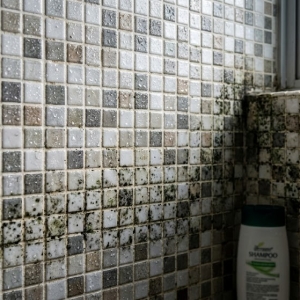
One of the key appeals of stone is its natural variation. No two pieces are exactly the same, which means the surface hides wear better than glass. However, this comes with a trade-off: most stone mosaics are porous and require sealing and resealing, especially in wet areas. Acidic cleaners can damage them, and if neglected, stone can stain or darken over time.
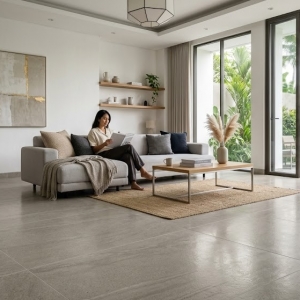
Stone mosaics work well on floors because the many grout lines add grip. They’re also more forgiving on slightly uneven substrates, which is beneficial in older homes.
Choose stone mosaics if:
-
You desire a natural, tactile feel.
-
The space is meant to evoke a calm or spa-like atmosphere.
-
You’re comfortable with sealing and gentle cleaning routines.
Avoid them if you’re looking for low maintenance or very bright, reflective surfaces.
Porcelain Mosaic Tiles: Balance and Durability
Porcelain mosaics strike a balance between glass and stone. They don’t reflect light as much as glass, but they’re more consistent and easier to care for than stone. Porcelain is dense and low-porosity, making it resistant to stains, water, and wear.
This durability makes porcelain mosaics a versatile option. They can be used on walls and floors, and are suitable for kitchens, bathrooms, and even outdoor areas if rated correctly. Many porcelain mosaics mimic stone or concrete, providing a natural look without the need for sealing.
Porcelain is also forgiving in daily life. It handles strong cleaners better and doesn’t change color easily. For families or rental units, this reliability is a significant advantage.
The downside is that porcelain lacks the depth of real stone or the sparkle of glass. Some may find it a bit flat unless paired with good lighting.
Choose porcelain mosaics if:
-
You prioritize durability and low maintenance.
-
The tiles will be used on floors or in wet areas.
-
You want a material that works well in almost any setting.
Avoid them if you’re specifically seeking high shine or raw natural texture.
How Grout Changes Everything
With mosaic tiles, the choice of grout is more important than many people realize. It constitutes a large part of the visible surface.
Matching grout creates a seamless look, allowing the mosaic to be perceived as texture rather than pattern. On the other hand, contrasting grout highlights each tile, potentially making the surface feel busier.
For wet areas, epoxy grout is worth considering. It resists stains and mold better, especially with glass and porcelain mosaics. Stone mosaics, however, still require sealing even with epoxy grout.
Ask your tile shop to show samples with different grout colors. The difference can dramatically change the overall mood.
Light, Scale, and Placement
Mosaics are most effective when used intentionally. Covering every wall can feel overwhelming, while using them as accents creates a more deliberate and sophisticated look.
Glass mosaics near mirrors or lights can amplify brightness. Stone mosaics on the floor can ground the room. Porcelain mosaics in niches or backsplashes can add detail without drawing too much attention.
Scale is also important. Pairing small mosaics with larger tiles elsewhere can create a balanced visual effect. Large tiles calm the space, while mosaics add focus.
Installation Realities to Consider
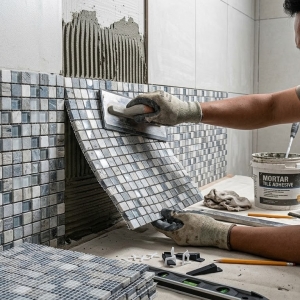
Mosaic tiles typically come mounted on mesh sheets, which aids in alignment but doesn’t eliminate the need for skill. Uneven adhesive, poor spacing, or rushed cuts can immediately show.
Glass mosaics require smooth substrates and the right adhesive color. Stone mosaics need sealing before and after grouting. Porcelain mosaics require proper slope on floors to ensure correct drainage.
Engage with your installer early in the process. Show them the mosaic sheets and discuss the layout. A brief conversation can prevent visible mistakes later.
Cost and Long-Term Value
In terms of cost, glass mosaics often come with the highest price per square meter. The cost of stone varies widely depending on the type. Porcelain is usually the most cost-stable option.
However, cost isn’t just about the material itself. Maintenance and time are also factors. A cheaper tile that requires constant care may end up costing more in the long run than a durable one that simply works.
How to Decide in a Tile Shop
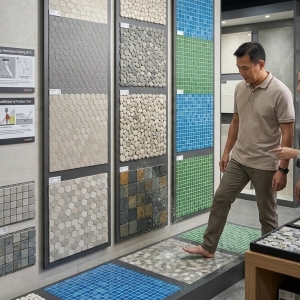
Avoid making decisions based solely on photos. Handle the samples, tilt them under different lighting conditions, wet them slightly, and feel the surface.
Ask where the mosaic is rated to be used. Inquire about sealing requirements and slip resistance. A reputable tile shop Singapore will provide clear answers and technical sheets, not just mood boards.
Final Thought
There is no one-size-fits-all “best” mosaic material. Glass brings light, stone brings depth, and porcelain brings balance. The right choice depends on where the tiles will be installed and how you plan to live with them.
Be honest about your willingness to maintain the tiles. Consider the lighting conditions and safety aspects. When these factors align, mosaic tiles cease to be mere decoration and become an integral part of how the space functions every day.