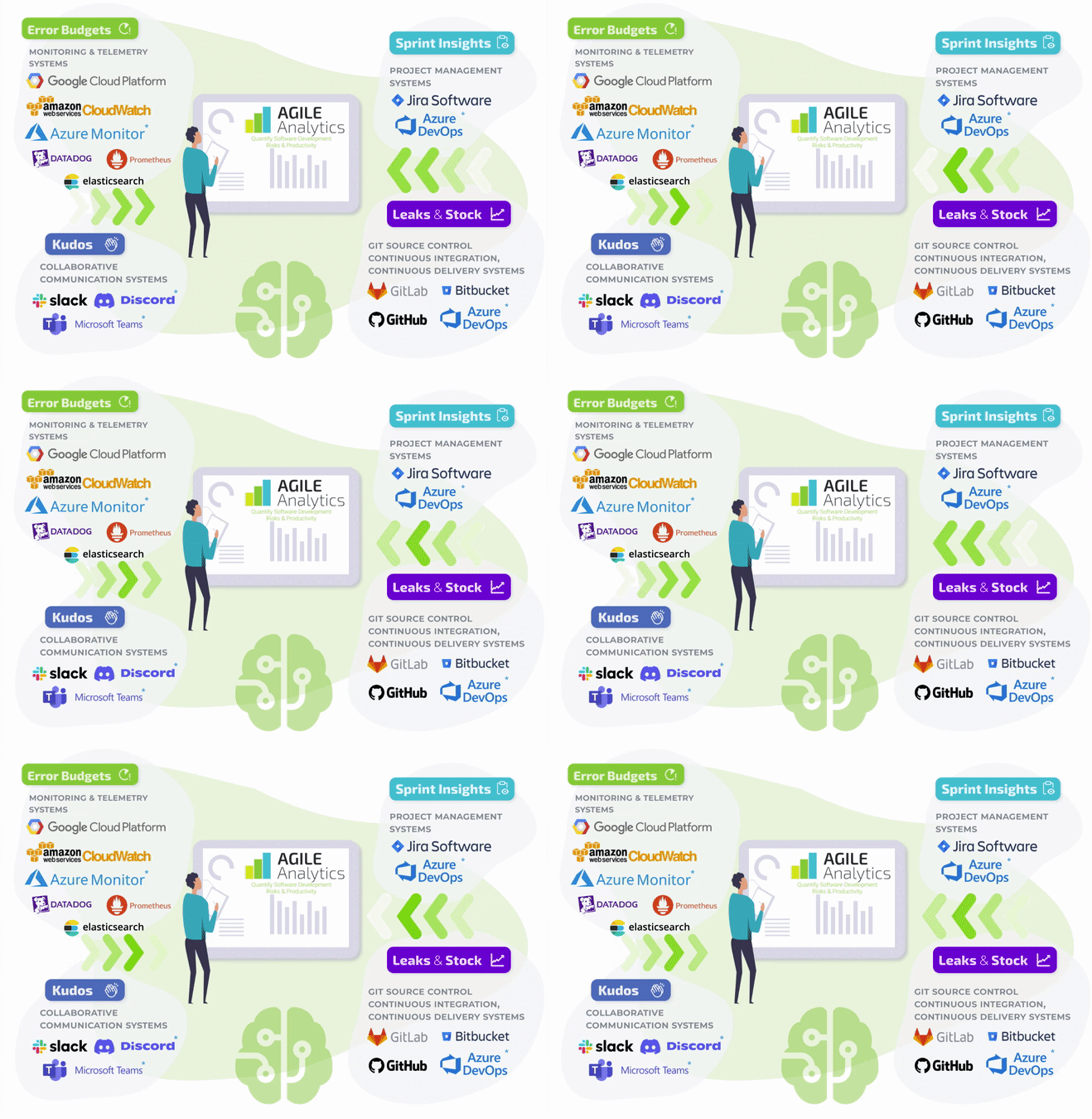






Introduction to Agile Analytics
Agile analytics is the practice of collecting, interpreting, and applying data from Agile workflows to improve decision-making and delivery performance. It goes beyond basic reporting by focusing on patterns, trends, and system behavior rather than isolated metrics.
In modern development environments, Agile analytics is often built on top of tools like Jira, where large volumes of workflow data are generated every day.
Why Agile Analytics Matters
The main purpose of Agile analytics is to help teams understand not just what is happening, but why it is happening. Instead of relying on intuition, teams use data-driven insights to guide planning and process improvement.
Key goals include:
Improving delivery predictability
Identifying inefficiencies in workflows
Supporting realistic planning and forecasting
Understanding team performance trends
Reducing delivery risks
This makes Agile analytics a foundation for continuous improvement in modern software development.
Core Components of Agile Analytics
Agile analytics is built around several core components that describe different aspects of delivery:
Flow metrics, such as cycle time and throughput, showing how work moves through the system
Performance trends, tracking how delivery changes over time
Capacity analysis, measuring how much work teams can handle sustainably
Work distribution, showing how tasks are spread across teams and stages
Predictability models, estimating future outcomes based on historical data
Together, these components create a complete view of system health.
From Reporting to Analytics
While Agile reporting focuses on visualizing current and historical data, Agile analytics goes a step further by interpreting that data.
For example:
A report might show that cycle time is increasing
Analytics tries to explain why it is increasing (bottlenecks, workload imbalance, or process changes)
This shift from observation to interpretation is what makes Agile analytics more powerful than traditional reporting.
Key Use Cases of Agile Analytics
Agile analytics is used in several practical areas:
Sprint planning, to set realistic goals based on historical performance
Forecasting, to estimate delivery timelines with greater accuracy
Process optimization, to identify and remove workflow inefficiencies
Team performance analysis, to understand productivity trends
Risk detection, to identify delays and bottlenecks early
These use cases help teams make better decisions at both tactical and strategic levels.
Challenges in Agile Analytics
Despite its benefits, Agile analytics also presents challenges:
Data inconsistency across teams or projects
Over-reliance on a few metrics like velocity
Difficulty interpreting complex flow patterns
Lack of standardized measurement practices
Risk of ignoring qualitative context
Without proper interpretation, analytics can lead to misleading conclusions.
Advanced Agile Analytics and Flow Thinking
Modern Agile analytics increasingly focuses on flow-based thinking. Instead of evaluating performance in isolated sprints, teams analyze how work moves continuously through the system.
This includes examining:
Queue times between workflow stages
Stability of throughput over time
Work-in-progress limits and their impact
Variability in delivery speed
System-level bottlenecks
This approach provides a more realistic understanding of delivery health.
Agile Analytics in Modern Tools
Many Agile teams rely on platforms such as Jira to generate the raw data needed for analytics. However, true Agile analytics often requires combining multiple data sources and applying deeper interpretation layers beyond standard dashboards.
As organizations scale, Agile analytics becomes essential for aligning teams, improving predictability, and supporting portfolio-level decision-making.
Conclusion
Agile analytics is a powerful evolution of traditional Agile reporting. It transforms raw workflow data into meaningful insights that help teams understand performance, improve processes, and make better decisions. By focusing on flow, trends, and system behavior, Agile analytics enables organizations to move from reactive tracking to proactive delivery optimization.
Agile analytics is the practice of collecting, interpreting, and applying data from Agile workflows to improve decision-making and delivery performance. It goes beyond basic reporting by focusing on patterns, trends, and system behavior rather than isolated metrics.
In modern development environments, Agile analytics is often built on top of tools like Jira, where large volumes of workflow data are generated every day.
Why Agile Analytics Matters
The main purpose of Agile analytics is to help teams understand not just what is happening, but why it is happening. Instead of relying on intuition, teams use data-driven insights to guide planning and process improvement.
Key goals include:
Improving delivery predictability
Identifying inefficiencies in workflows
Supporting realistic planning and forecasting
Understanding team performance trends
Reducing delivery risks
This makes Agile analytics a foundation for continuous improvement in modern software development.
Core Components of Agile Analytics
Agile analytics is built around several core components that describe different aspects of delivery:
Flow metrics, such as cycle time and throughput, showing how work moves through the system
Performance trends, tracking how delivery changes over time
Capacity analysis, measuring how much work teams can handle sustainably
Work distribution, showing how tasks are spread across teams and stages
Predictability models, estimating future outcomes based on historical data
Together, these components create a complete view of system health.
From Reporting to Analytics
While Agile reporting focuses on visualizing current and historical data, Agile analytics goes a step further by interpreting that data.
For example:
A report might show that cycle time is increasing
Analytics tries to explain why it is increasing (bottlenecks, workload imbalance, or process changes)
This shift from observation to interpretation is what makes Agile analytics more powerful than traditional reporting.
Key Use Cases of Agile Analytics
Agile analytics is used in several practical areas:
Sprint planning, to set realistic goals based on historical performance
Forecasting, to estimate delivery timelines with greater accuracy
Process optimization, to identify and remove workflow inefficiencies
Team performance analysis, to understand productivity trends
Risk detection, to identify delays and bottlenecks early
These use cases help teams make better decisions at both tactical and strategic levels.
Challenges in Agile Analytics
Despite its benefits, Agile analytics also presents challenges:
Data inconsistency across teams or projects
Over-reliance on a few metrics like velocity
Difficulty interpreting complex flow patterns
Lack of standardized measurement practices
Risk of ignoring qualitative context
Without proper interpretation, analytics can lead to misleading conclusions.
Advanced Agile Analytics and Flow Thinking
Modern Agile analytics increasingly focuses on flow-based thinking. Instead of evaluating performance in isolated sprints, teams analyze how work moves continuously through the system.
This includes examining:
Queue times between workflow stages
Stability of throughput over time
Work-in-progress limits and their impact
Variability in delivery speed
System-level bottlenecks
This approach provides a more realistic understanding of delivery health.
Agile Analytics in Modern Tools
Many Agile teams rely on platforms such as Jira to generate the raw data needed for analytics. However, true Agile analytics often requires combining multiple data sources and applying deeper interpretation layers beyond standard dashboards.
As organizations scale, Agile analytics becomes essential for aligning teams, improving predictability, and supporting portfolio-level decision-making.
Conclusion
Agile analytics is a powerful evolution of traditional Agile reporting. It transforms raw workflow data into meaningful insights that help teams understand performance, improve processes, and make better decisions. By focusing on flow, trends, and system behavior, Agile analytics enables organizations to move from reactive tracking to proactive delivery optimization.