







The comparison between 4140 vs 4130 steel is highly important in industries that depend on high-performance alloy steels for structural and mechanical applications. Both materials belong to the chromium-molybdenum steel family, commonly known as chromoly steel. These alloy steels are widely used in aerospace, automotive, manufacturing, construction, oil and gas, and seamless steel pipe production because of their outstanding strength, toughness, and reliability.
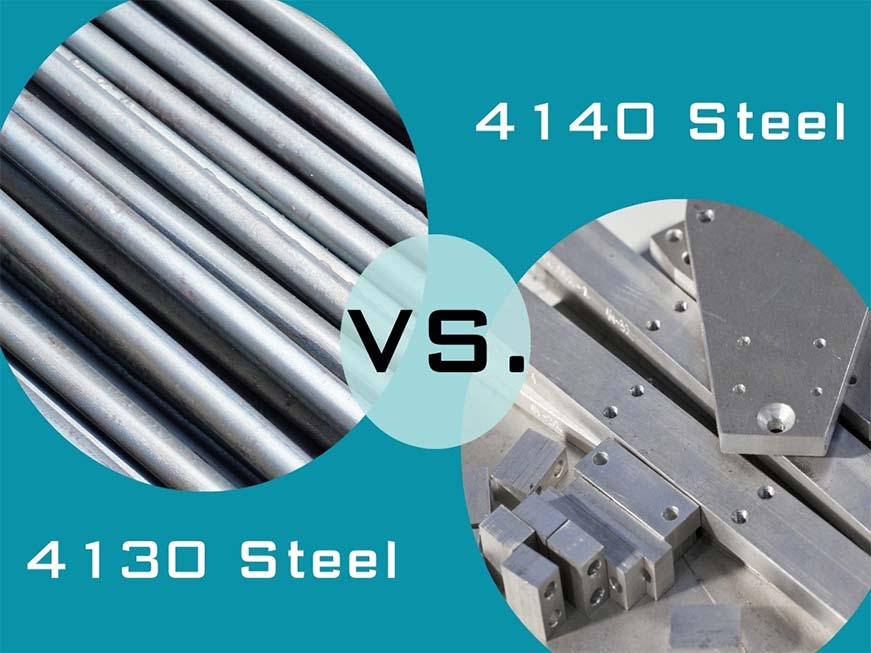
Although 4140 steel and 4130 steel contain similar alloying elements such as chromium and molybdenum, the major difference comes from their carbon content. 4140 steel contains approximately 0.40% carbon, while 4130 steel contains around 0.30% carbon. This difference in carbon levels directly affects hardness, tensile strength, wear resistance, and weldability.
4140 alloy steel is recognized for its exceptional hardness and high tensile strength. It performs extremely well in demanding industrial environments where components are exposed to heavy loads, impact, friction, and repeated stress. Because of its excellent wear resistance and fatigue strength, 4140 steel is commonly used for gears, shafts, crankshafts, heavy machinery components, industrial tools, and drilling equipment.
4130 steel, however, is known for its lighter weight, improved weldability, and balanced mechanical performance. The lower carbon content allows easier fabrication and forming while still maintaining strong structural integrity. Industries that require lightweight yet durable materials often select 4130 chromoly steel for aircraft tubing, race car chassis, roll cages, bicycle frames, and structural tubing systems.
Both alloy steels provide better corrosion resistance and hardenability than standard carbon steel. Their chromium and molybdenum content improves durability and mechanical stability, making them ideal for engineering applications requiring long-term performance under pressure.
Mechanical Strength and Heat Treatment Properties
One of the most important aspects in the 4140 vs 4130 steel discussion is mechanical strength and heat treatment performance. While both materials can be heat-treated to improve hardness and durability, 4140 steel generally achieves higher hardness levels due to its greater carbon concentration.
4140 steel is especially valued for its superior strength after quenching and tempering. The alloy maintains excellent toughness even in hardened conditions, making it highly effective for industrial machinery and high-load mechanical systems. Components made from 4140 steel can withstand extreme torque, abrasive wear, and repeated mechanical stress without significant deformation.
Because of these properties, manufacturers often choose 4140 steel for power transmission parts, hydraulic systems, heavy-duty fasteners, and seamless steel pipe products used in harsh operating environments. Its outstanding fatigue resistance allows machinery parts to maintain structural reliability during continuous industrial operation.
4130 steel offers a different set of advantages. Although it does not achieve the same hardness levels as 4140 steel, it provides an excellent balance between strength and flexibility. The material performs very well in applications where reduced weight and easier fabrication are more important than maximum surface hardness.
Another major advantage of 4130 steel is its excellent weldability. The lower carbon content minimizes the possibility of cracking during welding and heat treatment processes. This makes 4130 alloy steel highly suitable for custom fabrication, aerospace engineering, and structural manufacturing projects where welding precision is essential.
Machinability also differs between these two alloy steels. 4130 steel is generally easier to machine and shape, especially before heat treatment. In contrast, 4140 steel becomes harder to machine after hardening because of its increased surface toughness. However, the additional machining effort is often justified by its superior industrial performance and longer service life.
Industrial Applications and Engineering Performance
The industrial use of 4140 vs 4130 steel depends largely on performance requirements, environmental conditions, and manufacturing priorities. Both materials are trusted engineering steels, but each one serves different industries and operational demands.
4140 steel is heavily used in manufacturing sectors that require exceptional durability and wear resistance. Heavy industrial machinery, mining equipment, oilfield tools, hydraulic cylinders, industrial shafts, and mechanical gears often rely on 4140 alloy steel because it can tolerate severe operational stress and high-pressure conditions. Its resistance to abrasion and fatigue makes it one of the most dependable steels for demanding industrial environments.
The automotive industry also benefits from 4140 steel in applications involving crankshafts, connecting rods, axle components, and transmission systems. These components require high hardness and impact resistance to maintain long-term operational stability under continuous load conditions.
4130 steel dominates applications requiring lightweight structural strength and fabrication flexibility. In the aerospace industry, 4130 chromoly steel is widely used for aircraft frames, fuselage tubing, and structural support systems because of its excellent strength-to-weight ratio. The racing industry also prefers 4130 steel for roll cages and performance vehicle frames where durability and reduced weight are equally important.
Construction and fabrication industries frequently use 4130 seamless steel tubing because it offers reliable structural performance while remaining easier to weld and shape. Pressure vessels, industrial piping systems, and lightweight frameworks often incorporate 4130 steel for its balanced mechanical characteristics.
Cost considerations may also influence the selection between 4140 steel and 4130 steel. In many cases, 4130 steel can be slightly more economical due to easier machining and reduced heat-treatment requirements. However, 4140 steel often provides better long-term value in applications where extreme durability and wear resistance reduce maintenance and replacement costs.
Both alloy steels continue to play an essential role in modern engineering, seamless steel pipe manufacturing, and industrial production because of their proven reliability and mechanical efficiency.
Conclusion
The comparison of 4140 vs 4130 steel demonstrates that both alloy steels are highly effective materials designed for different industrial purposes. 4140 steel stands out for its superior hardness, wear resistance, and high-load performance, making it ideal for heavy machinery, industrial shafts, gears, and demanding mechanical systems. Its excellent fatigue strength and durability allow it to perform reliably under extreme stress conditions.
4130 steel, on the other hand, is widely appreciated for its lightweight structure, outstanding weldability, and strong strength-to-weight ratio. Industries such as aerospace, automotive racing, and structural fabrication frequently rely on 4130 chromoly steel for applications requiring both durability and fabrication flexibility.