


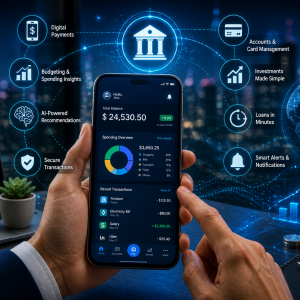





Financial technology, commonly known as FinTech, is changing the way people manage money. In the past, managing personal finances required visiting banks, using cash, and handling paperwork. Today, FinTech solutions allow people to save, invest, transfer money, and track expenses directly from mobile apps.
FinTech is not only improving convenience. It is also increasing financial access for millions of people worldwide. Digital wallets, online banking, and smart investment platforms are making financial services faster, cheaper, and easier to use.
In 2026, FinTech will continue growing rapidly, and its influence on money management will become even stronger. This article explains how FinTech is transforming personal and business finance, the tools driving this change, and what users should understand about the future of financial services.
What Is FinTech?
FinTech refers to the use of modern technology to improve and automate financial services. It includes mobile banking apps, digital payment platforms, online lending systems, blockchain technology, and AI-powered financial tools.
FinTech companies focus on solving financial problems through digital innovation. Many FinTech startups are competing directly with traditional banks by offering faster services, lower fees, and better user experience.
FinTech is now a major part of everyday finance, and its role is expanding in both developed and developing economies.
Digital Banking Is Making Finance More Accessible
One of the biggest ways FinTech is transforming money management is through digital banking. People can now open bank accounts online, manage transactions, and apply for financial services without visiting physical branches.
Digital banking is especially useful in regions where access to traditional banks is limited. Many people in rural areas can now manage money using mobile banking apps.
Digital banking also improves customer experience. Users can check balances, transfer money, and receive real-time alerts instantly. This makes money management faster and more transparent.
In the coming years, digital banking will become even more advanced through AI integration and improved security systems.
Budgeting and Expense Tracking Apps Are Changing Financial Habits
FinTech has made budgeting easier than ever. Many mobile apps now help users track spending, set savings goals, and manage monthly budgets.
These apps automatically categorize expenses such as food, transport, shopping, and bills. This allows people to understand where their money goes and reduce unnecessary spending.
In 2026, budgeting apps will become smarter through AI. They will predict spending patterns, recommend better saving plans, and send alerts when users exceed budget limits.
This trend is improving financial discipline, especially for young people who want better control over their income.
Mobile Payments and Digital Wallets Are Replacing Cash
Digital wallets are one of the most popular FinTech innovations. Instead of carrying cash, people now use mobile wallets to make payments, transfer money, and pay bills.
Platforms like Apple Pay, Google Pay, PayPal, and regional wallet services have made payments fast and convenient. QR code payments are also becoming common in stores, restaurants, and public transport systems.
Cashless payments reduce the risk of theft and make transactions more secure. Many businesses also prefer digital payments because they simplify record keeping.
By 2026, digital wallets will become even more common, especially in developing countries where mobile payment adoption is increasing rapidly.
FinTech Is Making Investing Easier for Everyone
Investing was once limited to wealthy individuals or professionals. Today, FinTech platforms have made investing accessible to almost anyone.
Investment apps allow users to buy stocks, mutual funds, and digital assets with small amounts of money. Many platforms also offer automated investment options known as robo-advisors. These tools build investment portfolios based on user goals and risk tolerance.
FinTech has also introduced fractional investing, where users can buy small parts of expensive stocks instead of purchasing full shares. This allows more people to participate in global markets.
In the future, AI-powered investing tools will become more accurate, helping users make better investment decisions.
Online Lending and Digital Loans Are Growing Fast
Traditional loan processes often take time and require paperwork. FinTech has simplified this process through online lending platforms.
Many FinTech companies now provide instant loan approvals. AI systems analyze customer data such as income, transaction history, and credit behavior to approve loans quickly.
This trend is especially helpful for small businesses and freelancers who may struggle to access loans through traditional banks. Digital lending also supports individuals who need quick financial assistance.
However, users should be careful because some digital loan services may have high interest rates. Responsible borrowing and transparency will remain important as online lending grows.
AI and Automation Are Improving Financial Decision-Making
Artificial intelligence is becoming a key part of FinTech. AI helps financial apps analyze user behavior and provide smart recommendations.
For example, AI can suggest savings plans, predict future expenses, and recommend investment opportunities. Banks also use AI to detect fraud and monitor suspicious transactions.
Automation is improving financial processes by reducing manual work. Tasks like bill payments, salary transfers, and tax calculations can now be automated through apps.
In 2026, AI-based financial tools will become more personalized, helping users manage money more effectively.
Blockchain Is Changing Trust and Security in Finance
Blockchain is another important FinTech innovation. Blockchain is a digital ledger technology that records transactions securely and transparently.
Blockchain is widely known for supporting cryptocurrency, but its use is expanding beyond digital coins. Many financial institutions are using blockchain for secure payments, supply chain finance, and identity verification.
Blockchain-based systems can reduce fraud because transactions cannot be easily changed once recorded. This improves trust in digital financial systems.
In the coming years, blockchain will play a stronger role in cross-border payments because it can reduce transaction costs and improve speed.
Cross-Border Payments Are Becoming Faster and Cheaper
Sending money internationally has traditionally been expensive and slow. FinTech has improved cross-border payments by offering faster digital transfer services.
Many platforms now allow users to send money globally within minutes. This is important for freelancers, businesses, and families who depend on international remittances.
FinTech companies use digital systems and blockchain technology to reduce fees and improve transaction transparency. This trend will continue growing in 2026 as global trade and remote work expand.
FinTech Is Supporting Financial Inclusion Worldwide
One of the biggest positive impacts of FinTech is financial inclusion. Millions of people worldwide still do not have access to traditional banking services.
FinTech platforms allow users to access financial tools with just a smartphone. This includes savings accounts, digital wallets, and micro-loans.
In developing countries, FinTech is helping people manage money without needing physical banks. This improves economic growth because more people can participate in financial systems.
In 2026, financial inclusion will remain a major focus for FinTech companies, especially in regions with low banking access.
The Role of Embedded Finance in Money Management
Embedded finance is a growing trend where financial services are included inside non-financial platforms. For example, e-commerce apps offering installment payments or ride-sharing apps providing digital wallets.
In 2026, embedded finance will expand further. People will be able to access financial services directly inside shopping, travel, and service apps without needing separate banking platforms.
This will improve convenience and create stronger partnerships between banks and technology companies.
Risks and Challenges of FinTech
Although FinTech offers many benefits, it also has risks. Cybersecurity is one of the biggest concerns because hackers often target digital finance platforms.
Data privacy is another challenge. FinTech companies collect large amounts of user information, which must be protected responsibly.
There is also the issue of regulation. Many FinTech services operate across multiple countries, and regulations differ from region to region. Governments are introducing stricter policies to ensure consumer safety.
Users must also be cautious about scams and fake apps. It is important to use trusted and licensed FinTech services to avoid fraud.
Conclusion
FinTech is transforming money management by making financial services faster, cheaper, and more accessible. Digital banking, mobile wallets, budgeting apps, online lending, and AI-driven investing tools are changing how people save, spend, and invest.
FinTech is also improving financial inclusion by helping underserved populations access banking services through smartphones. At the same time, cybersecurity, privacy, and regulation remain major concerns that must be addressed.
As 2026 approaches, FinTech will continue shaping the future of personal and business finance. People who learn to use these tools wisely will benefit from better money management and financial control.
Frequently Asked Questions (FAQs)
What is FinTech in simple words?
FinTech means using technology to improve financial services such as banking, payments, loans, and investing.
How does FinTech help in money management?
FinTech helps by providing apps for budgeting, expense tracking, digital payments, investing, and automated financial planning.
Are FinTech apps safe to use?
Most FinTech apps are safe if they are licensed and use strong security features like encryption and two-factor authentication.
How is AI used in FinTech?
AI is used for fraud detection, customer support, personalized budgeting, loan approvals, and automated investment planning.
Will FinTech replace traditional banks?
FinTech may not fully replace banks, but it will continue changing how banks operate. Many banks are adopting FinTech tools to stay competitive.