


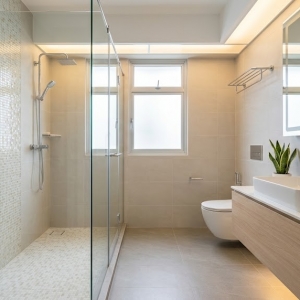



Step into a thoughtfully designed contemporary home, and an immediate sense of calm washes over you. The space feels intentional, unburdened, almost meditative. This atmosphere doesn't emerge from carefully selected furniture alone. The ground beneath you plays a starring role. In recent years, architects and interior specialists have deliberately stepped away from conventional hardwood and plush carpeting. Their replacement of choice? Large format porcelain tile.
This movement transcends temporary vogue. Concrete advantages fuel this transition. Anyone undertaking a renovation or ground-up construction project should understand these benefits. Knowledge here prevents expensive errors and long-term disappointment. The material succeeds across three dimensions: visual sophistication, physical resilience, and lifestyle compatibility.
Eliminating Visual Fragmentation
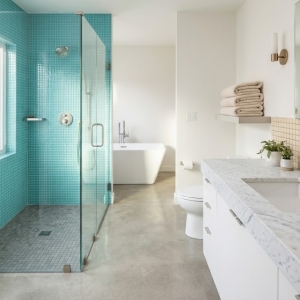
Conventional tiling typically spans 12 inches square or smaller. The unavoidable outcome: a dense network of grout lines. Within modest rooms, this lattice fractures visual continuity. The surface reads as chaotic, subdivided.
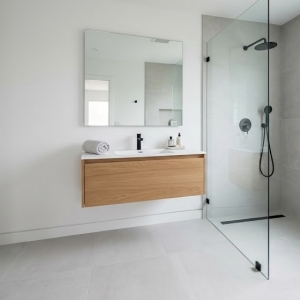
Large format porcelain tile transforms this dynamic. Industry classification requires minimum 15-inch dimensions on at least one side. Common specifications reach 24x48 inches, with premium options extending further. Installation yields dramatically reduced grout presence. Visual flow continues uninterrupted across expansive surfaces. The effect convincingly emulates quarried stone or monolithic concrete.
This uninterrupted plane alters spatial psychology. Interiors expand perceptually. Distraction diminishes. Contemporary design philosophy prioritizes essential elements; removing visual interference becomes paramount. Flooring ceases to be mere covering—it becomes spatial architecture.
Engineering for Daily Demands
Residential living rooms absorb remarkable punishment. Constant foot traffic patterns. Heavy furniture migration. Active pets. Traditional carpet traps particulates and biological allergens. Natural wood displays every scratch and compression mark. Large format porcelain tile confronts these realities with engineered superiority.
Porcelain constitutes an advanced ceramic category. Production employs purified clay bodies and kiln temperatures exceeding 2,200°F. Resulting material achieves exceptional density and microscopic porosity. Moisture absorption approaches nil. Liquids pool superficially, awaiting effortless removal without penetration or staining.
For active households, this engineering translates to generational durability. Chair repositioning leaves zero evidence. Unlike timber substrates, humidity cycles cause no warping, cupping, or gapping. Post-installation, the surface remains static. No refinishing protocols. No resealing schedules. Installation completion essentially terminates maintenance concerns.
The Professional Imperative
A critical reality confronts aspiring DIY enthusiasts. These impressive slabs appear deceptively manageable. Installation complexity far exceeds standard ceramic procedures. Their substantial footprint amplifies every substrate deficiency.
Imperfect underlayments generate catastrophic outcomes. Individual tiles destabilize, producing lippage—height differentials between adjacent edges. Minor variances disappear on diminutive tiles. On 48-inch spans, discrepancies become conspicuous safety hazards. Trip potential escalates dramatically.
Correct implementation mandates comprehensive substrate remediation. Concrete slabs and wood subfloors frequently demand self-leveling overlays prior to tile contact. Specialized installation systems—mechanical leveling clips and compression wedges—maintain planar alignment throughout mortar curing. These requirements elevate labor investment substantially. Contractor selection demands verified large-format experience. Accelerated preparation virtually guarantees pressure-induced cracking.
Aesthetic Evolution
Early large format porcelain tile offerings presented limited palettes—predominantly gray slate simulations. Technological advancement has exploded these boundaries. Contemporary digital printing achieves extraordinary fidelity in replicating natural materials.
Authentic marble veining, weathered timber characteristics, and industrial concrete patinas now appear with remarkable accuracy. Achieve reclaimed oak aesthetics with absolute moisture immunity. Surface finish options span matte, honed, and polished treatments. Residential applications favor matte or honed specifications for slip resistance and soiling concealment.
This versatility enables genuine design freedom. Whether pursuing minimalist Japanese aesthetics, raw industrial atmospheres, or warm Mediterranean influences, large format porcelain tile accommodates the vision. Material becomes servant to design intent.
The Selection Process
Specification decisions warrant disciplined methodology. Digital photography fails to communicate essential tactile and chromatic qualities. Commercial showroom illumination differs fundamentally from residential lighting spectra. Color temperature perceptions shift dramatically between environments.
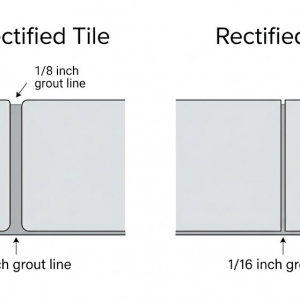
Physical ceramic tile shop visitation proves indispensable. Direct handling reveals edge precision and rectification quality. Mechanically rectified tiles feature precisely finished edges enabling minimal grout dimensions—essential for intended monolithic appearance.
Ceramic tile shop personnel provide critical logistical guidance. Large format porcelain tile production occurs in identifiable lots. Future repair scenarios require identical batch matching. Established suppliers ensure adequate initial procurement, eliminating irreconcilable color variations during subsequent needs.
Maintenance Simplicity
Operational care requirements remain remarkably modest. No proprietary cleaning systems necessary. Routine debris removal via sweeping or vacuuming prevents surface abrasion. Neutral-pH cleaning agents address periodic mopping. Acidic preparations—vinegar, citrus derivatives, or hypochlorite solutions—accelerate grout degradation and require avoidance.
Grout joints constitute the only maintenance-sensitive element. Fortunately, reduced joint density minimizes exposure. Professional-grade penetrating sealers applied during installation prevent particulate embedding within cementitious grout matrices. Properly sealed systems require only damp mopping for appearance retention.
Economic Evaluation
Initial investment for large format porcelain tile exceeds conventional alternatives. Material unit costs surpass standard ceramic. Installation labor and preparation material requirements increase project budgets. However, extended ownership economics reverse this apparent disadvantage.
Traditional hardwood demands periodic abrasive refinishing—typically decennial cycles. Carpet replacement occurs every five to eight years in primary living zones. Porcelain installations persist indefinitely. Long-term residency distributes initial capital across extended timeframes. Resale valuation benefits additionally. Sophisticated purchasers recognize premium stone-look flooring quality. They appreciate freedom from near-term replacement obligations.
Final Considerations
Successful flooring selection balances aspirational aesthetics against practical survival requirements. Desired appearances must withstand authentic household activity. Large format porcelain tile achieves this synthesis. It provides the expansive, serene surfaces contemporary design mandates while possessing structural capacity for active family environments.
Acknowledge installation sophistication. Substrate perfection warrants investment. Experienced professional engagement proves essential. Dedicate effort to ceramic tile shop consultation for optimal material identification. Execute these protocols properly, and flooring performs its supportive role silently. It unifies spatial experience without visual competition. Within refined design practice, this represents ideal achievement.