







Standing in the truck accessory aisle, I faced a wall of tonneau cover boxes with confusing specs and marketing buzzwords. "Best-in-class water resistance!" "Military-grade materials!" "Premium aerodynamic design!" Every cover claimed to be the best, but they ranged from $250 to $1,600. How was I supposed to actually compare them?
After buying (and returning) two covers that didn't meet my needs, I developed a systematic comparison framework. Over the past decade, I've used this method to evaluate dozens of tonneau covers across three F-150s. This guide shares that exact framework—teaching you how to cut through marketing hype and identify the right cover for your specific F-150 and needs.
The Comparison Framework: 8 Critical Factors
Don't compare tonneau covers by guessing. Use these eight factors systematically.
Factor 1: Cover Type and Operation Style
This is your starting point—everything else flows from here.
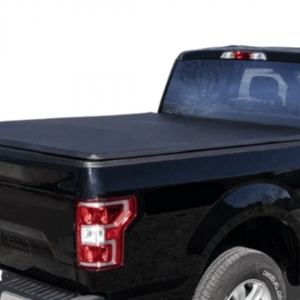
Soft Roll-Up Covers
Operation: Vinyl or canvas material that rolls toward the cab Access: Complete bed access when fully rolled Time to open: 10-15 seconds Security level: Basic (can be cut) Price range: $200-600
Best for: Budget-conscious buyers, those needing frequent full bed access, lightweight haulers
F-150 specific advantage: Works perfectly with Ford's tailgate step—no interference when rolled up
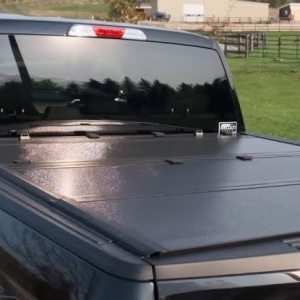
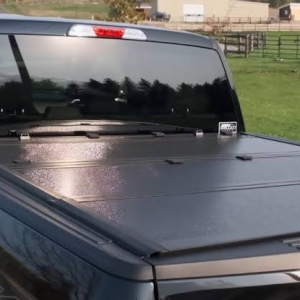
Hard Folding Covers
Operation: Rigid panels (usually tri-fold) connected by hinges Access: Partial or complete, panels stack when open Time to open: 15-30 seconds Security level: Excellent (requires power tools to breach) Price range: $500-1,200
Best for: Security-conscious owners, all-weather use, work trucks, balanced needs
F-150 specific advantage: Can stand on panels to access roof rack (most rated 300-400 lbs)
Hard Rolling Covers
Operation: Aluminum slats that roll up Access: Nearly complete (loses 8-10 inches to rolled cover) Time to open: 5-10 seconds Security level: Excellent Price range: $800-1,400
Best for: Those wanting hard cover security with easier operation than folding
Retractable Covers
Operation: Aluminum slats retract into canister at front of bed Access: Complete (canister takes 10-12 inches permanently) Time to open: 5 seconds (one-handed) Security level: Excellent to superior Price range: $1,200-2,000
Best for: Premium F-150 trims (Lariat+), frequent bed access, those valuing convenience
F-150 specific advantage: Low-profile design complements modern F-150 styling perfectly
My comparison approach: First, eliminate cover types that don't match your primary use case. If you need maximum security, soft covers are out. If you need frequent full bed access, hard folding becomes less appealing. This narrows your choices before diving into specs.
Factor 2: Security Level (Real-World Assessment)
Marketing claims about security mean nothing. Here's how to actually assess it.
The 5-Tier Security Scale I Use:
Level 1 - Visual Deterrent Only (Soft snap covers)
- Stops: Casual observers
- Doesn't stop: Anyone determined
- Time to breach: 5-10 seconds
Level 2 - Basic Security (Quality soft roll-ups)
- Stops: Opportunistic thieves
- Doesn't stop: Anyone with a knife
- Time to breach: 10-20 seconds
Level 3 - Good Security (Entry-level hard folding)
- Stops: Most casual thieves
- Doesn't stop: Determined thieves with tools
- Time to breach: 2-4 minutes with power tools
Level 4 - Excellent Security (Premium hard folding)
- Stops: 90% of theft attempts
- Doesn't stop: Professional thieves with time
- Time to breach: 4-6 minutes with professional tools
Level 5 - Maximum Security (Premium retractable)
- Stops: 95%+ of theft attempts
- Doesn't stop: Extremely determined professionals
- Time to breach: 6+ minutes with specialized tools
How to compare: Look at actual materials (aluminum vs. vinyl), locking mechanisms (rotary latches vs. basic locks), and panel thickness. Ignore marketing terms like "military-grade"—focus on construction.
My testing method: I ask myself: "How long would it take ME to get into this cover if I lost my keys?" If the answer is "under a minute with household tools," it's not secure.
Factor 3: Weather Resistance (Beyond Marketing Claims)
Every cover claims to be "waterproof" or "weather-resistant." Here's how to evaluate the truth.
The Seal System Analysis:
Single-seal systems (most soft covers):
- One layer of weatherstripping
- Effective in light-to-moderate rain
- Expect some seepage in heavy downpours
- Water resistance: 80-85%
Double-seal systems (quality hard folding):
- Weatherstripping plus drain channels
- Very effective in heavy rain
- Minor seepage only in extreme conditions
- Water resistance: 90-95%
Triple-seal systems (premium retractable):
- Multiple weatherstrips plus sealed tracks plus drain system
- Excellent in all conditions
- Virtually waterproof in normal use
- Water resistance: 95-99%
What to look for when comparing:
- Number of seal layers
- Presence of drain channels/tubes
- Seal material quality (bulb seals vs. flat strips)
- How seals attach (adhesive vs. mechanical)
My comparison trick: Ask the manufacturer or check reviews for "Can I drive through a car wash?" If yes with confidence, sealing is likely good. If they hedge, expect leaks.
F-150 specific: Ford's aluminum bed has different seal requirements than steel beds. Verify the cover is designed for aluminum bed rails (2015+ F-150s).
Factor 4: Durability and Lifespan
This determines your cost-per-year of ownership.
Material Quality Indicators:
Soft covers:
- Marine-grade vinyl: 5-7 years typical
- Standard vinyl: 3-5 years typical
- Canvas/hybrid: 4-6 years typical
- UV-treated vs. untreated (doubles lifespan)
Hard covers:
- Aluminum honeycomb panels: 10-15 years
- Fiberglass panels: 8-12 years
- Powder-coated finish: 8-12 years
- Painted finish: 10-15 years (if maintained)
Retractable covers:
- Aluminum slats: 12-18 years
- Polycarbonate slats: 10-15 years
- Mechanism quality determines overall life
How to compare warranties:
- 1-2 year warranty: Budget/entry-level
- 3-5 year warranty: Quality mainstream
- 5-10 year warranty: Premium products
- Lifetime warranty: Either exceptional or marketing (check fine print)
My real-world experience:
- Budget soft cover: Replaced after 4 years (vinyl degraded)
- Mid-range hard folding: Still going strong at 8 years
- Premium retractable: 7 years and looks new
Cost-per-year calculation:
- $300 cover lasting 4 years = $75/year
- $900 cover lasting 12 years = $75/year
- Same annual cost, but premium cover performs better throughout
Factor 5: Installation Complexity
This affects both DIY success and professional installation cost.
Installation Difficulty Scale:
Level 1 - Very Easy (20-30 minutes, no help needed)
- Clamp-on soft roll-ups
- No drilling required
- Basic hand tools only
- Perfect first-time DIY project
Level 2 - Easy (45-60 minutes, possibly need help)
- Clamp-on hard folding covers
- No drilling required
- Socket set needed
- Helper useful for alignment
Level 3 - Moderate (1-2 hours, help recommended)
- Some hard folding covers
- May require drilling
- Torque wrench helpful
- Two people recommended
Level 4 - Challenging (2-3 hours, professional recommended)
- Most retractable covers
- Drilling required (4-8 holes)
- Precision critical
- Professional installation often worth it ($150-250)
F-150 considerations:
- Aluminum bed drilling is straightforward but permanent
- Tailgate backup camera wiring considerations (2018+)
- BoxLink system access preservation
- Spray-in bed liner compatibility
Comparison questions to ask:
- Clamp-on or drill-in mounting?
- How many clamps/bolts required?
- Average installation time per manufacturer?
- Do I have required tools?
- Is professional installation recommended?
My rule: If cover costs $1,000+, professional installation ($150-200) is insurance worth paying.
Factor 6: Operational Convenience
How easy is the cover to use daily? This matters more than you think.
Daily Use Scenarios to Consider:
Quick access (grabbing tools, tossing in groceries):
- Soft roll-ups: Must unroll sections (moderate)
- Hard folding: Can open just one panel (good)
- Retractable: Pull handle, instant access (excellent)
Full bed access (loading lumber, furniture):
- Soft roll-ups: Complete access (excellent)
- Hard folding: Good but panels take space (good)
- Retractable: Good but canister permanent (good)
One-handed operation:
- Soft roll-ups: Difficult (need both hands)
- Hard folding: Difficult (panels are heavy)
- Retractable: Easy (one-hand pull)
Operation in bad weather:
- Soft roll-ups: Gets hands wet/dirty
- Hard folding: Manageable
- Retractable: Easy even in rain
My daily driver test: I evaluate covers based on my most common action—grabbing tools from the bed 2-3 times daily. Retractable covers excel here. Hard folding works well. Soft roll-ups become tedious.
Your usage pattern matters: If you access your bed once weekly, operation convenience matters less. If you access it 5+ times daily, it's critical.
Factor 7: F-150 Bed Length Compatibility
F-150s come in three bed lengths. Compatibility isn't optional.
Bed Length Options:
5.5-foot bed (SuperCrew most common):
- Widest cover selection available
- Easiest to find in stock
- Most affordable (less material)
- Perfect for daily driver F-150s
6.5-foot bed (SuperCrew or SuperCab):
- Very popular configuration
- Excellent cover availability
- Balanced hauling and maneuverability
- Most versatile option
8-foot bed (SuperCab or Regular Cab):
- Fewer cover options available
- Often special order required
- More expensive (more material)
- Limited retractable options
Critical comparison step: NEVER assume compatibility. Verify your exact bed length before comparing covers. A 6.5-foot cover will NOT fit a 5.5-foot bed.
How to measure: Cab back to tailgate (inside measurement) with tailgate closed.
F-150 specific quirk: Some years have slightly different bed dimensions even within same nominal length. Always check manufacturer fitment guide for your specific year.
Factor 8: Price and Value Analysis
Price alone doesn't determine value. Use this framework.
The Value Calculation:
Formula: (Benefits - Total Cost) ÷ Expected Lifespan = Annual Value
Example comparison:
Budget soft cover:
- Cost: $300
- Lifespan: 4 years
- Security: Basic
- Annual cost: $75
- Annual value: Low-to-moderate
Premium hard folding:
- Cost: $900
- Lifespan: 12 years
- Security: Excellent
- Annual cost: $75
- Annual value: High
Same annual cost, vastly different performance and durability.
Price Tier Comparison:
Budget ($200-400):
- Soft roll-ups, entry hard folding
- Basic features and security
- Shorter lifespan (3-5 years)
- Good value if budget-limited
Mid-Range ($400-800):
- Quality soft covers, good hard folding
- Solid features and security
- Good lifespan (5-8 years)
- Best overall value for most buyers
Premium ($800-1,200):
- Premium hard folding, entry retractable
- Excellent features and security
- Long lifespan (8-12 years)
- Best value for long-term ownership
Luxury ($1,200-2,000):
- Premium retractable covers
- Top-tier everything
- Longest lifespan (12-15+ years)
- Best value for convenience-focused buyers
My value assessment rule: Don't buy the cheapest or most expensive automatically. Match price tier to your F-150 usage intensity and value priorities.
Creating Your Comparison Matrix
Here's my actual comparison process when evaluating covers:
Step 1: Define Your Priorities (Rank These 1-5)
- Security importance: ___
- Weather protection importance: ___
- Budget constraint: ___
- Ease of use importance: ___
- Appearance importance: ___
- Durability importance: ___
Step 2: Create Comparison Table
| Cover Model | Type | Price | Security | Weather | Durability | Install | Operation | Total Score |
|---|---|---|---|---|---|---|---|---|
| Cover A | /5 | /5 | /5 | /5 | /5 | /25 | ||
| Cover B | /5 | /5 | /5 | /5 | /5 | /25 | ||
| Cover C | /5 | /5 | /5 | /5 | /5 | /25 |
Rate each factor 1-5 based on your research, then total scores.
Step 3: Apply Weighted Scoring
Multiply scores by importance (your priorities from Step 1) for more accurate comparison.
Example: If security is priority #1 for you, multiply that score by 2. If budget is less important, divide that score by 2.
Step 4: Consider Real-World Reviews
Where to find honest reviews:
- F-150 forums (F150Forum.com)
- YouTube installation and long-term reviews
- Reddit r/f150 discussions
- Amazon verified purchase reviews
- RealTruck customer reviews
Red flags in reviews:
- Multiple reports of same issue
- Customer service problems
- Installation difficulties beyond normal
- Premature wear/failure
- Fitment issues on specific F-150 years
Green flags in reviews:
- Consistent positive long-term reports
- Good manufacturer support
- Easy installation experiences
- Durability exceeding expectations
- F-150 specific positive mentions
Practical Comparison Examples
Let me walk through real comparisons I've done:
Comparison 1: Budget Conscious Daily Driver
My needs:
- F-150 XLT, 6.5' bed
- Budget: $400 maximum
- Garage parking (security less critical)
- Occasional bed access
- Want fuel economy improvement
Finalists:
- TruXedo TruXport ($280)
- Gator EFX ($320)
- Extang Trifecta 2.0 ($380)
Comparison: All three met basic needs. TruXedo had best reviews, easiest installation, good warranty. Winner based on total value, not just price.
Result: Bought TruXedo TruXport. Served perfectly for 4 years.
Comparison 2: Work Truck Security Priority
My needs:
- F-150 Lariat, 5.5' bed
- Budget: $1,200 maximum
- $2,500+ in tools in bed daily
- Street parking (security critical)
- Frequent bed access needed
Finalists:
- BAK BAKFlip MX4 ($950)
- RetraxPRO MX ($1,450) - over budget
- UnderCover Armor Flex ($850)
Comparison: BAKFlip MX4 hit sweet spot—excellent security, proven durability, good operation, within budget. RetraxPRO was superior but $450 over budget. UnderCover was solid but less convenient.
Result: Bought BAKFlip MX4. Perfect for needs, stayed in budget.
Comparison 3: Premium F-150 Aesthetic Match
My needs:
- F-150 King Ranch, 6.5' bed
- Budget: Flexible
- Premium appearance priority
- Convenience important
- All-weather use
Finalists:
- RetraxPRO MX ($1,450)
- BAK Revolver X4s ($1,250)
- UnderCover Elite LX ($1,100)
Comparison: RetraxPRO MX matched King Ranch luxury, easiest operation, best long-term value despite highest price. Appearance and convenience justified premium.
Result: Bought RetraxPRO MX. No regrets—worth every penny for premium F-150.
Common Comparison Mistakes to Avoid
Mistake #1: Comparing on Price Alone
The trap: "This $250 cover does the same thing as that $900 cover!"
Reality: Materials, construction, durability, and security differ dramatically. Cheap covers often cost more long-term through replacements.
Better approach: Compare cost-per-year including replacement frequency.
Mistake #2: Overvaluing Marketing Claims
The trap: "This cover has ADVANCED WEATHER PROTECTION™ and MILITARY-GRADE MATERIALS!"
Reality: Marketing buzzwords mean nothing. Look at actual construction, warranties, and user reviews.
Better approach: Ignore marketing, focus on specs and real-world performance.
Mistake #3: Not Verifying F-150 Year Compatibility
The trap: "It says F-150, so it fits my F-150!"
Reality: Bed rail designs change between generations. A cover for 2014 F-150 may not fit 2021.
Better approach: Verify exact year, bed length, and any special features (bed liner type, etc.).
Mistake #4: Ignoring User Reviews from Actual F-150 Owners
The trap: "This review from a Silverado owner says it's great!"
Reality: Fit, function, and compatibility differ by truck model.
Better approach: Prioritize reviews from verified F-150 owners with same bed length.
Mistake #5: Not Considering Total Cost of Ownership
The trap: "I saved $400 buying the cheaper cover!"
Reality: Cheaper cover may need replacement in 3 years. More expensive cover lasts 10+ years.
Better approach: Calculate cost-per-year plus maintenance costs over expected ownership.
The Final Decision Framework
After comparing covers using this framework, use this final decision tree:
Question 1: What's your absolute maximum budget?
- Under $400: Soft roll-up options
- $400-800: Quality soft or entry-hard folding
- $800-1,200: Premium hard folding
- $1,200+: Premium retractable
Question 2: What's your #1 priority?
- Security: Hard folding or retractable
- Convenience: Retractable
- Budget: Soft roll-up
- Versatility: Soft roll-up or hard folding
Question 3: How often do you access your bed?
- Daily (5+ times): Retractable
- Several times weekly: Hard folding
- Occasionally: Any type works
Question 4: Where do you park?
- Street/public: Hard folding or retractable
- Garage: Any type works
- Work sites: Hard folding or retractable
Question 5: How long will you keep your F-150?
- 1-3 years: Budget option acceptable
- 4-7 years: Mid-range best value
- 8+ years: Premium worth investment
My Personal Comparison Checklist
Before I buy any tonneau cover, I verify:
- Exact F-150 year compatibility confirmed
- Correct bed length (5.5', 6.5', or 8')
- Bed liner compatibility verified (spray-in, drop-in, or none)
- Reviews from actual F-150 owners read
- Installation complexity assessed
- Warranty terms understood
- Manufacturer reputation checked
- Return policy acceptable
- Total cost calculated (cover + installation if needed)
- At least 2-3 options compared side-by-side
Conclusion: Making the Right Choice
Comparing tonneau covers doesn't have to be overwhelming. Use the systematic framework in this guide:
- Start with cover type based on primary needs
- Assess security realistically
- Evaluate weather resistance honestly
- Calculate durability and cost-per-year
- Consider installation requirements
- Evaluate daily operational convenience
- Verify F-150 compatibility precisely
- Analyze true value, not just price
The "best" tonneau cover doesn't exist—but the best cover FOR YOUR F-150 AND NEEDS absolutely does.
I've owned soft roll-ups, hard folding, and retractable covers. Each was perfect for that specific F-150 and my needs at the time. The key is matching the cover to your actual usage pattern, priorities, and budget.
Take your time with this decision. A well-chosen tonneau cover serves you for 5-15 years. A poorly chosen one frustrates you until you replace it.
Use this comparison framework, do your research, and you'll make the right choice for your F-150.